One Piece: How a Cartoon Skull Became a Symbol of Defiance in Indonesia
Estimated reading time: 6–8 minutes
- The *One Piece* Jolly Roger has become a symbol of political resistance in Indonesia.
- Protesters are using its imagery to express discontent with government centralization.
- The flag resonates with themes of freedom and justice from the anime’s narrative.
- Global observers note this form of pop culture resistance reflects broader youth activism.
- The Indonesian government’s mixed response strengthens the movement’s symbol.
- Introduction
- What is the One Piece Protest Symbolism?
- One Piece Analysis: From Anime Narrative to Real-World Protest
- The Political Symbolism Guide: Decoding the Jolly Roger
- Beyond the Main Arc: One Piece Film Red Analysis and The Power of Song
- A Global Pattern: Pop Culture Resistance in the Modern Age
- The Government’s Mixed Response and the Movement’s Future
- Watch TV Without Cable
- Frequently Asked Questions (FAQ)
Introduction
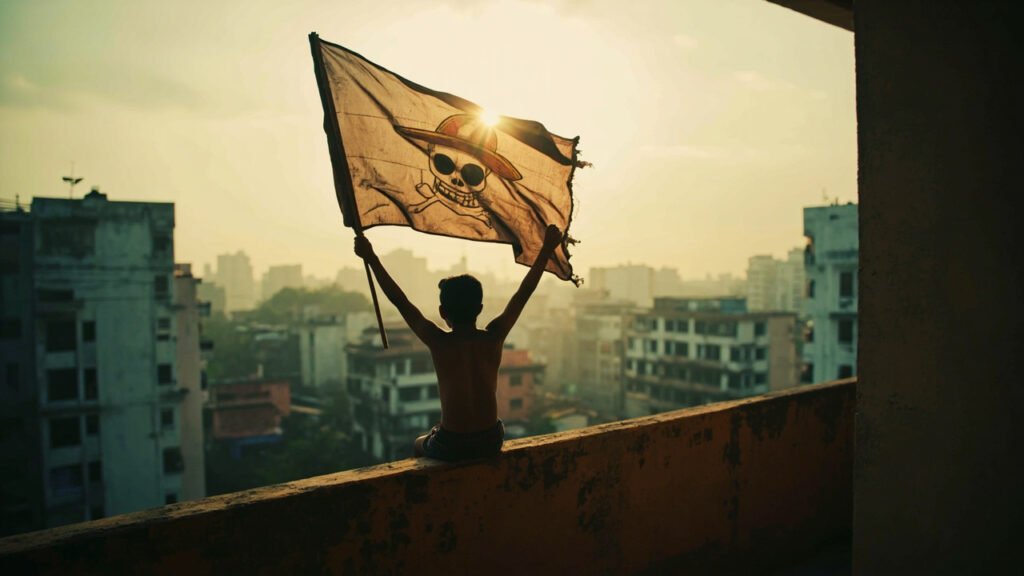
One piece analysis reveals a fascinating phenomenon unfolding in Indonesia, where the iconic Jolly Roger from the globally popular anime and manga series has transformed from a simple cartoon emblem into a potent symbol of political resistance. Following President Prabowo Subianto’s call for citizens to fly the national flag in celebration of Independence Day, thousands of Indonesians instead raised the black pirate flag of Monkey D. Luffy, the series’ protagonist, featuring a skull wearing a straw hat. This act of peaceful protest, using pop culture to voice dissent, highlights a deep-seated discontent with what many perceive as increasing government centralization and a rollback of democratic freedoms.
What is the One Piece Protest Symbolism?
At its core, the protest uses the symbolism of the Straw Hat Pirates’ Jolly Roger to represent a fight for freedom and against injustice, themes central to the One Piece narrative. Protesters are not aligning with piracy but with the crew’s ideals. This form of pop culture resistance allows for a unified, visually striking, and culturally resonant method of expressing political grievance, particularly for a younger, digitally-native generation.
One Piece Analysis: From Anime Narrative to Real-World Protest
A deep one piece analysis shows why this particular story resonates so powerfully in a political context. The epic tale follows Monkey D. Luffy and his crew as they sail the Grand Line, challenging corrupt world governments, tyrannical warlords, and unjust systems in pursuit of freedom and dreams. This narrative directly mirrors the frustrations of many Indonesians who feel their government is becoming increasingly authoritarian. The one piece luffy character analysis is key here; Luffy is not a traditional hero for personal gain, but a liberator who instinctively fights for the oppressed and challenges illegitimate authority. His straw hat, replicated on the protest flag, is more than an accessory; it’s a promise, a symbol of trust and inherited will.
This connection between fiction and reality is not lost on global observers. As noted in a report on how the symbol was adopted across Asia, the flag has become ‘A symbol of liberation’: how the One Piece manga flag became the symbol of Asia’s gen Z protest movement (The Guardian). The piece details how the iconography bypasses traditional political language, creating a shared identity for a movement that transcends national borders.
The Political Symbolism Guide: Decoding the Jolly Roger
Understanding this protest requires a basic political symbolism guide. Symbols are shortcuts for complex ideas, and the Jolly Roger is a masterclass in symbolic communication.
- The Skull: Universally represents danger, rebellion, and a challenge to mortality. In this context, it signals a “fight to the death” for democratic ideals.
- The Straw Hat: This is Luffy’s signature item. It symbolizes his specific character traits: unwavering resolve, loyalty, and a simple, direct desire for freedom. It personalizes the rebellion, anchoring it in a beloved and morally clear character.
- The Color Black: Traditionally associated with anarchy, defiance, and mourning. Flying a black flag is a stark, visual rejection of the official red-and-white national flag, symbolizing a mourning for lost freedoms.
This cartoon protest meaning is powerful because it is both specific and ambiguous. Authorities cannot easily prosecute a cartoon symbol, yet its message is understood by all who see it. It’s a peaceful, creative, and legally ambiguous form of dissent that is difficult to suppress. For more insights into global youth movements, you can explore our related guide on modern protest tactics.
Beyond the Main Arc: One Piece Film Red Analysis and The Power of Song
The protest symbolism isn’t limited to the main series. A one piece film red analysis provides another layer of understanding. The film centers on Uta, a globally beloved singer whose goal is to create a “New Genesis” by trapping people in a virtual dream world. The villainous plot is ultimately a metaphor for the dangers of escapism and being seduced by a seemingly perfect but ultimately false utopia—a narrative that resonates with those critical of government propaganda or empty promises. The film’s themes of using music and performance to control or liberate parallel how modern political movements use media and symbolism. To see how entertainment and politics continue to intersect globally, check out our service at ShowMira.
A Global Pattern: Pop Culture Resistance in the Modern Age
Indonesia’s situation is part of a broader trend of pop culture resistance. Around the world, younger generations are leveraging the narratives and iconography of anime, music, and television to articulate political stances in a language they understand. This phenomenon highlights the power of Gen Z, though it also reveals its limitations, as explored in The mass protests in Asia show the power of Gen Z – and its limit.
Other recent examples abound. The complex relationship between artists and authoritarian regimes was highlighted when US comedians defend decision to play in Saudi Arabia: ‘They’re paying me enough to look the other way’, showcasing the moral compromises that can occur. Similarly, the co-opting of protest anthems is a constant battle, as seen when Labi Siffre told Tommy Robinson to stop using his anti-apartheid anthem in Something inside so strong. And, in a more direct parallel to *One Piece*, satire has taken aim at powerful leaders, exemplified by the episode where They’ve finally gone there: South Park lets rip at Benjamin Netanyahu.
| Protest Symbol | Origin | Core Message |
|---|---|---|
| Straw Hat Jolly Roger | One Piece Anime/Manga | Defiance against centralized power, fight for freedom and justice. |
| Something Inside So Strong | Labi Siffre Anti-Apartheid Song | Resilience and strength in the face of oppression and racism. |
| South Park Satire | Comedy Central Series | Criticism of political figures and policies through humor and absurdity. |
The Government’s Mixed Response and the Movement’s Future
The Indonesian government’s reaction to the One Piece protests has been notably mixed, which has inadvertently strengthened the protesters’ position. Some officials decried the flags as divisive and even treasonous, a response that perfectly validated the protesters’ fears about shrinking tolerance for dissent. Others, however, accepted it as a legitimate form of democratic expression, creating a confusing official narrative.
This mixed signal is a classic case of a state struggling to respond to a decentralized, symbol-based movement. Cracking down on anime imagery would appear absurd and heavy-handed, yet ignoring it allows the symbol to grow in power. This dynamic demonstrates that the simple, universal desire for freedom, as championed in *One Piece*, remains a potent and unpredictable force in Indonesian politics. For those looking to understand the media strategies behind such modern movements, our experts at ShowMira can provide deeper analysis.
Watch TV Without Cable
Enjoy streaming sports, movies, and live events without the hassle of cable! Powered by ShowMira, your source for modern entertainment.
Frequently Asked Questions (FAQ)
Q: Why are Indonesians using a *One Piece* flag to protest?
A: They are using the Straw Hat Pirates’ Jolly Roger because the series’ themes of fighting corrupt authority and seeking freedom directly mirror their own political desires. It’s a form of symbolic, peaceful protest that is culturally resonant and difficult for the government to censor.
Q: Is flying the *One Piece* flag illegal in Indonesia?
A: The legality is ambiguous. While some government officials have criticized it as potentially treasonous, others have defended it as legitimate democratic expression. There is no widespread law against flying a fictional flag, which is part of its strategic strength as a protest symbol.
Q: What does the straw hat on the skull represent?
A: The straw hat is the signature possession of the main character, Monkey D. Luffy. It symbolizes his character: a simple, determined, and freedom-loving individual who fights for his friends and the oppressed. It transforms the generic pirate skull into a symbol of specific, virtuous rebellion.
Q: Is this protest movement only happening in Indonesia?
A: While the specific political context is Indonesian, the use of the *One Piece* flag as a protest symbol has been seen in other parts of Asia. It reflects a global trend of “pop culture resistance” where younger generations use media iconography to express political ideals.
Q: How can a cartoon be taken so seriously as a political symbol?
A: Stories and symbols have always held profound power. The narrative of *One Piece* provides a clear, moral framework for resisting oppression. In an age of digital media, these fictional narratives can become powerful, shared reference points that unite people more effectively than traditional political rhetoric.
Conclusion
The journey of the Straw Hat Jolly Roger from a cartoon sketch to a banner of real-world defiance is a testament to the enduring power of story. This comprehensive one piece analysis demonstrates that the protest is not about the anime itself, but about the fundamental ideals it represents—freedom, justice, and the courage to challenge injustice. The Indonesian protesters have masterfully co-opted a global pop culture phenomenon to voice a deeply local and urgent political message, proving that sometimes, the most powerful weapon against authority is a simple, drawn skull wearing a straw hat. To stay informed on how pop culture continues to shape our world, consider reaching out to us at ShowMira for more engaging content and analysis.